Arriving at Pilanesberg National Park, we have little time to prepare for what lies ahead. The choppers are already in the sky, the team on the ground ready to move into action. I am here as a guest of Toyota South Africa Motors (TSAM), who participate in several conservation initiatives. The involvement in the rhino-dehorning project is driven by Future Toyota Vice President John Thomson, a man whose passion for the animals and conservation in general is inspiring and the reason the vehicles on the ground have been donated by Toyota to Pilanesberg to enable the success of the ongoing protection operations.
John introduces us to Chris Stanford from Pilanesberg Wildlife Trust, who gives a quick briefing. ‘Please listen and follow the instructions. It may be to stand still or to get back in the vehicle. The priority of the entire situation is the animal’s wellbeing. We take our lead from the vet. When they administer the reversal, the response is quick. Within a minute, the animal will get up and start moving.’
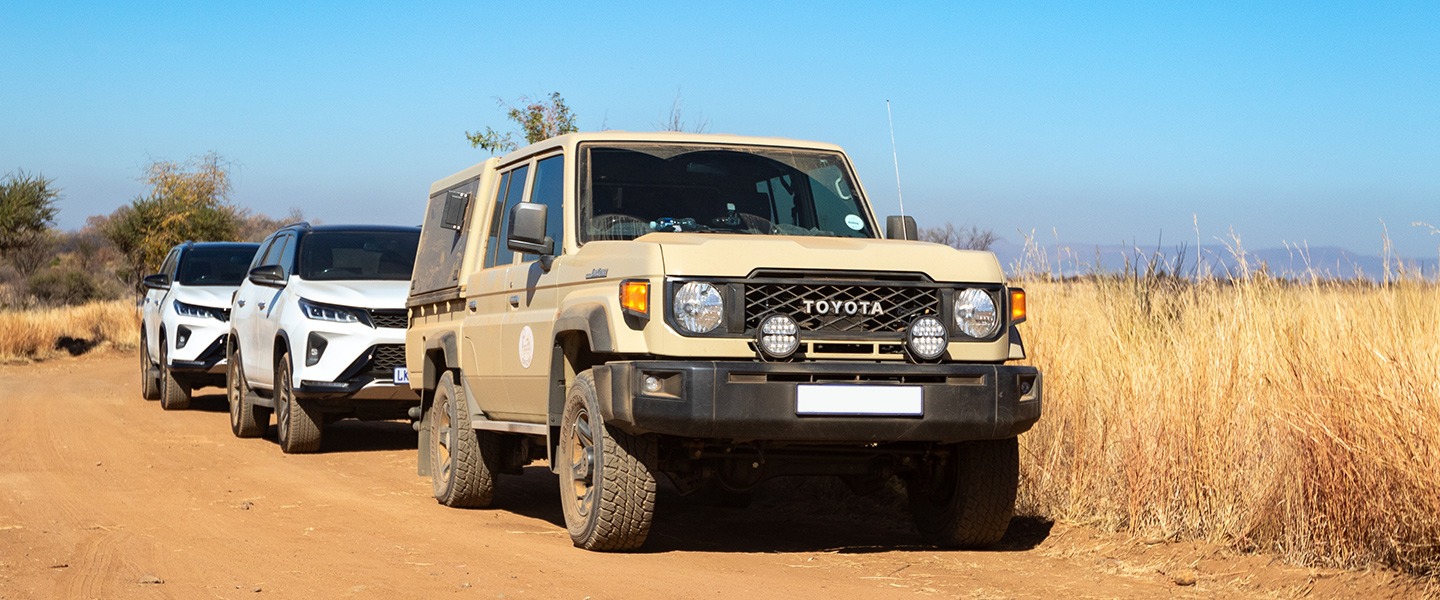
He is interrupted as a voice crackles over the radio, followed by a flurry of activity. The rhino, sedated by a dart perfectly shot by a ranger hanging precariously out of the helicopter, is gently herded into an open space by the skilful pilot. A convoy of Toyotas – this is bush country after all and the perfect roads for Land Cruisers, Hilux bakkies and Fortuners – race towards the direction of the Robinson R44 circling low ahead of us.
The team kicks into action immediately. The rhino’s eyes are covered and his ears plugged to block out as much as possible and to minimise the association with humans. While veterinarian and wildlife specialist Gerhardus Scheepers (the very unassuming ‘Bond of the bush’ who has 007 sewn on the inside of his collar), moves in to prepare for the dehorning, a second team proceeds to take samples and a third attends to tagging the animal. Everyone has a role to play, and the whole operation takes place with clinical precision.
There are not always as many people involved in the dehorning process, but a wildlife veterinary team is on board to do research on the effects of the drugs used in an ongoing search for the best possible solution and the least impact on the animal. ‘We are researching the different concentrations to see if there is a correlation between the concentration of the drug and the positive results you get,’ explains Jacques O’Dell, wildlife lecturer and clinician in the Faculty of Veterinary Science at the University of Pretoria (UP). ‘The goal of our study is to improve the welfare of the rhino during dehorning. In this case, we are looking to see which drugs improve the cardio-respiratory compromise that the animals experience during immobilisation. Today we are testing the different doses of two drugs used commonly on rhinos to see if we can alleviate the compromise.’

As Jacques and his team, under the supervision of Professor Leith Meyer, Director of the Centre for Veterinary Wildlife Research in the Faculty of Veterinary Science at UP, take blood pressure and blood gases (they measure every three minutes to see the effect on the heart rate, blood pressure and oxygenation of the blood), Gerhardus takes us through what he is measuring. ‘The growth plate is about 8–10cm from where the skin and the horn meet each other. We have to measure and cut above that. It is not painful to the animal at all, it’s like clipping a nail,’ he explains as he marks the line and picks up the saw to smoothly remove the horn, which is immediately measured and logged. Research shows there is no negative effect on the rhino – cortisol levels or herd structure – and the process is totally painless. ‘The welfare of the animal is always our number-one priority,’ says Gerhardus, firmly tuned into the background hum of instructions: ‘Temperature? Blood pressure? Heart rate? Confirm it’s a bull?…’
I crouch down and stroke the big beast – so powerful at around 2,000kg, yet so vulnerable right now. Never before, and most likely never again, will I be so close to a rhino. I feel his hot breath on my hand and hear his heavy breathing. I touch the area around his mouth and am taken aback by how incredibly soft it is compared to his rough hide, as is the skin in his ‘armpit’. I try to swallow the emotion away, but when I see the almost perfect imprint of a heart within the core of the horn – a natural marvel – I feel the tears well up. It is a sight that will remain with me.

As they tag the beast with a new solar-powered tag that assists in anti-poaching but also serves as an ecological management tool (to monitor where the animals concentrate and their feeding patterns), a bright pink antiseptic liquid is applied to the stump and a stripe of paint sprayed on the hide, a procedure that allows the pilot to see from above which animals have been dehorned.
And then it’s over. We are advised to move back to the vehicle as the reversal drug is about to be administered. Within two minutes, the rhino lumbers to its feet. He stands there quietly before slowly heading off, seemingly oblivious to what has just happened.

The emotion is thick in the air. ‘The day you don’t feel anything is the day you stop doing this,’ says John, breaking the silence.
Gerhardus agrees: ‘Ultimately, we would rather see a live, healthy rhino without a horn than a dead one.’
As much as I wish we didn’t have to be there, fighting for the survival of the species, I feel so privileged to have witnessed first-hand the passion of our eco-warriors and being able to lay my hands on a rhino, physically feeling the warmth, the life, the strength in him. The magnitude of this moment will be with me forever. I just pray that these gentle giants will be with us forever, too.

About rhino dehorning
The process to dehorn rhinos started around 2016. The procedure is painless, and although the horn is removed, the tiny amount left behind continues to grow, which means the process needs to be done every couple of years. It’s a costly exercise, as it involves a great number of people – wildlife vets and assistants, pilots and ground teams – a helicopter, vehicles, and drugs to sedate and stabilise the rhinos. The costs for the above operation in Pilanesberg was purely covered via donor funding from the likes of Toyota South Africa (which covered about 70% of the total cost); the Pilanesberg Wildlife Trust; Altron; Netstar, who donated radios to the anti-poaching units and refurbished the repeater networks; and Vodacom, who fund the data for SIM cards to allow effective monitoring in the park. Since 2016, Toyota has also donated three vehicles and rebuilt another five in conjunction with their Monitor Dealers (the elite after-sales dealers for service and parts). The vehicles’ service costs are covered by TSAM with the support of the Toyota Genuine, the brand’s comprehensive service and maintenance programme.
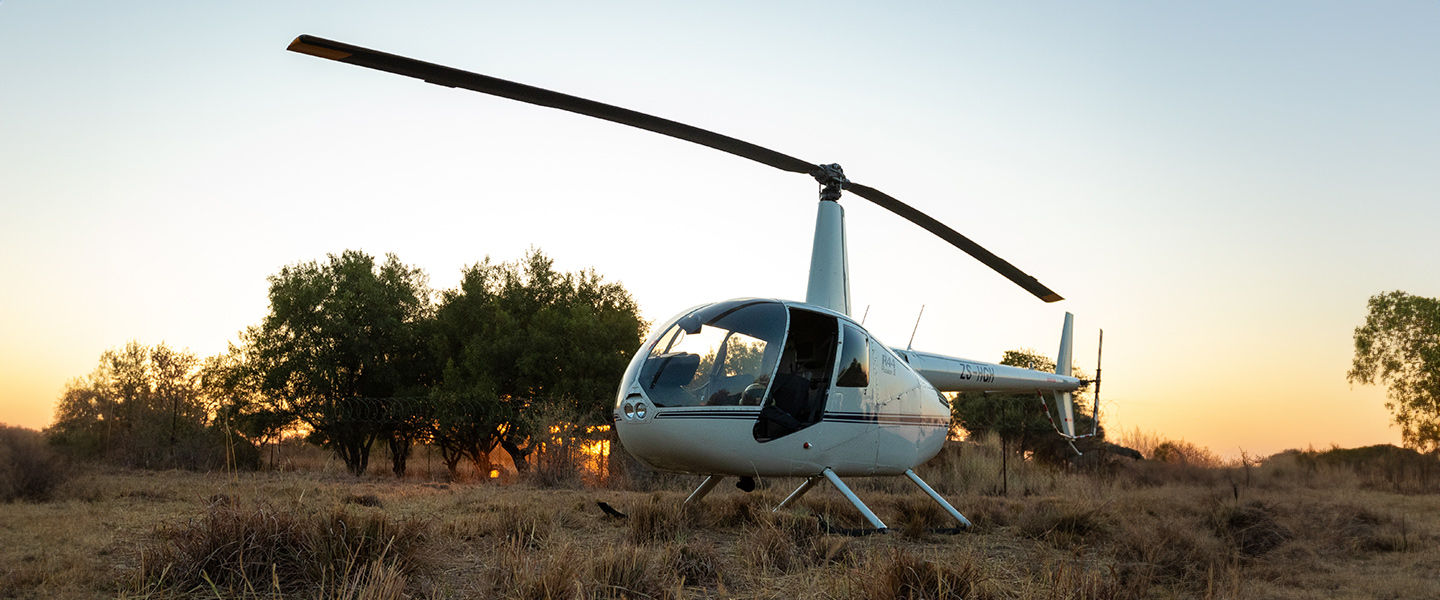
There are many reasons why Toyota is involved, explains Future Toyota Vice President John Thomson:
1) Our products have the ability to fulfil a lifestyle.
2) Many of our customers are found in these parks daily.
3) We have a social responsibly to ensure our heritage is looked after for generations to come.
4) Globally, Toyota has a sound environmental policy.
Unfortunately, Pilanesberg is seriously underfunded and major conservation projects like these are not funded by the National Parks Board or the Northwest Parks Board, which is why private and corporate funding is critical. Donations to the Pilanesberg Wildlife Trust can be made via their website: https://pilanesbergwildlifetrust.co.za/
 Connect