 Connect



The Toyota Environmental Challenge 2050 is all about going beyond zero environmental impact to achieve a net positive impact – in other words, putting in more than it takes out. The environmental policy focuses on six challenges: life cycle zero CO2 emissions, new–vehicle zero CO2 emissions, plant zero CO2 emissions, minimising and optimising water usage, establishing a recycling-based society and systems, and establishing a future society in harmony with nature. Globally, it is well on its way to achieving these goals, and in South Africa the urgency to address environmental concerns is being tackled head–on.
 Toyota Connect
Environmentally Friendly Initiatives for a Sustainable Future

3 Minute Read
Toyota South Africa Motors leads the way with its environmental initiatives.
Toyota South Africa Motors leads the way with its environmental initiatives.
‘At Toyota South Africa Motors (TSAM), our commitment to sustainability is not just a responsibility, it’s a driving force propelling us towards a greener tomorrow.’
Leon Theron, Senior Vice President of Sales and Marketing at TSAM

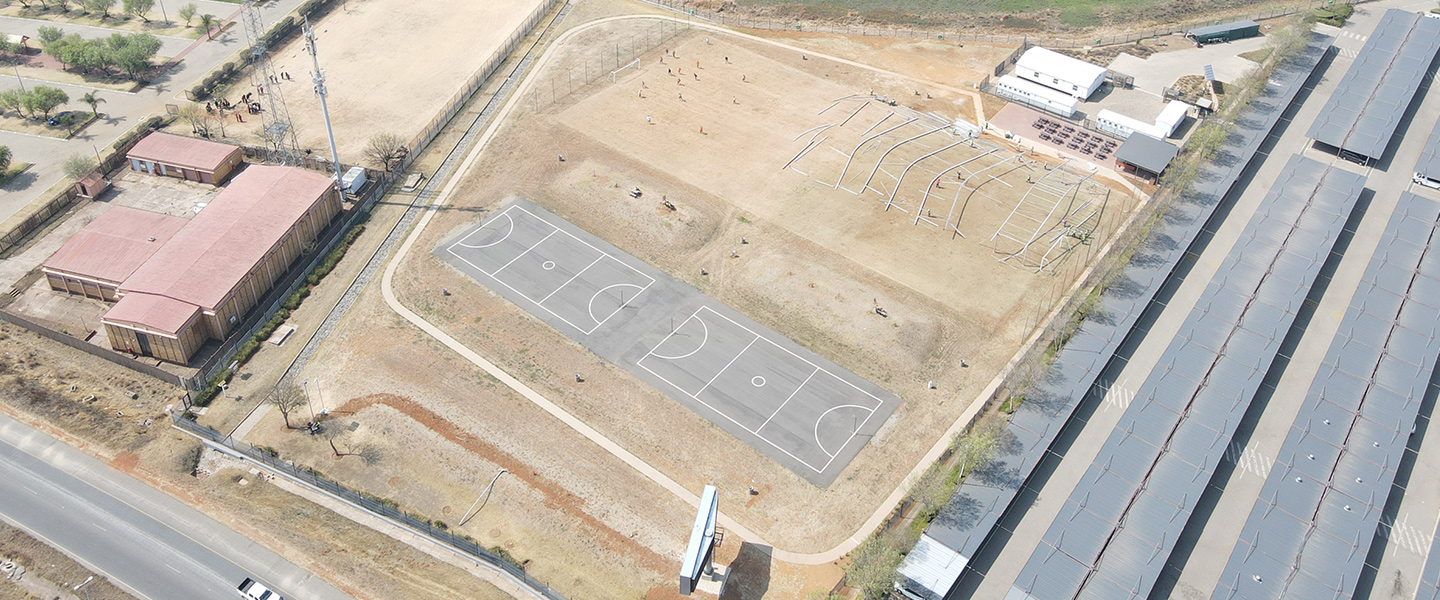

At Toyota Africa Parts Centre (TAPC), the initiatives underscore the commitment to responsible corporate citizenship:
Embracing a circular economy
Packaging has a huge impact on the environment, so TSAM has implemented solutions in daily practices. Packaging from large inbound shipments is repurposed for export, catering to small and large picking needs. They reuse cardboard for disc and clutch plate support to minimise waste and maximise utility, while boxes and sleeves are also reused.

Designing energy-efficient spaces
At TAPC, the conscientious use of glazing on windows means the workspaces are flooded with natural light, thereby reducing the need for artificial lighting. This extends to the office spaces and warehouse facilities. Warehouse machinery has been transitioned to operate exclusively on electricity, minimising emissions and fostering a greener workspace. Warehouse lights illuminate only when staff enter, while the installation of LED lights and light-sensing technology minimises unnecessary energy consumption. The journey towards sustainability is supported by the installation of 475kW of solar energy, with a target of increasing the solar installation to 3.3MW of power with battery storage by 2024.

Reducing landfill waste
In Johannesburg, including the Sandton head office and TAPC, waste-to-landfill has decreased from 81 tonnes in the 2018/19 financial year to 27 tonnes in the fiscal 2022/23, with a projected 12 tonnes for the current year. TAPC aims to eliminate landfill waste entirely by the end of 2025. Key initiatives include waste separation, recycling, composting and donating unrecyclable items to local businesses and animal-rescue centres. TAPC diverts 99.8% of its operational waste from landfills.
Nurturing biodiversity
TAPC contributes to biodiversity conservation through wetland initiatives within the Parkhaven Pan and surrounding conservation area near the Atlas Road plant in Boksburg. This involves ongoing removal of invasive vegetation, focusing on long-term wetland maintenance to preserve the ecosystem’s biodiversity. Biofilters in the recreational area ensure stormwater is filtered before entering the wetland. The Parkhaven Pan’s wetland is considered nearly pristine, boasting high ecosystem functionality and supporting flourishing fauna, including owls, helmeted guineafowl, terrestrial game birds and various mammals, while the riparian ecosystem (the wetland area adjacent to rivers and streams) is looking healthy.

Preserving water
A 2 million-litre stormwater collection for irrigation has been implemented for effective water-storage solutions.
‘Every initiative we take is a step towards a more sustainable future,’ concludes Leon Theron, Senior Vice President of Sales and Marketing at TSAM.

Enable your lifestyle with Toyota Connect.
Sign up and receive all the latest lifestyle news in your email.
Toyota South Africa Motors (TSAM) respects your privacy and is committed to protecting your personal information in line with global data protection standards. To understand how we process and protect your information we encourage you to read our Privacy Notice.
By clicking Subscribe you agree to TSAM processing your personal information for the purpose of this request.
Did you find this page helpful?
©2026 Toyota South Africa Motors (Pty) Ltd
