 Connect

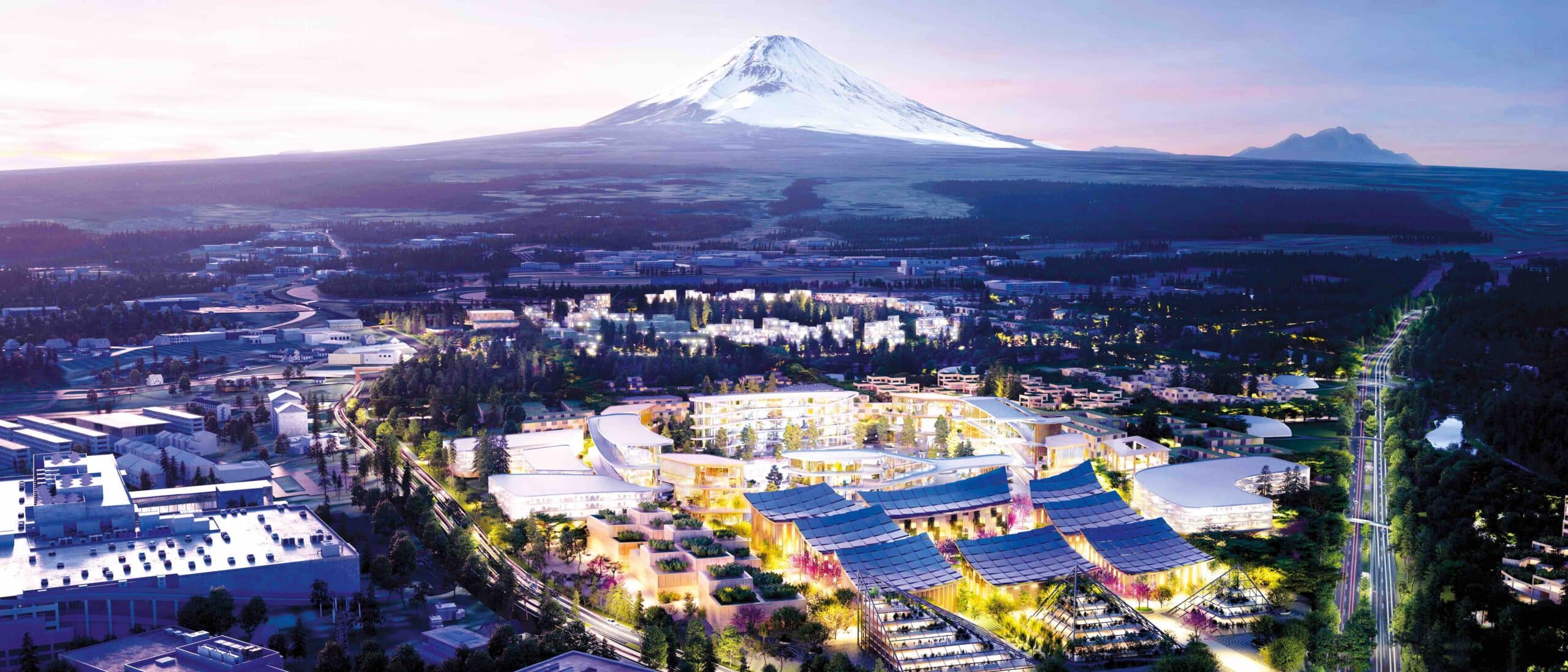



Envisioned as a “living laboratory”, Woven City will serve as a home to full-time residents and researchers, who will be able to test and develop technologies such as autonomy, robotics, personal mobility, smart homes and artificial intelligence in a real-world environment.

“Building a complete city from the ground up, even on a small scale like this, is a unique opportunity to develop future technologies, including a digital operating system for the city’s infrastructure,” says Akio Toyoda, president of the Toyota Motor Corporation. “With people, buildings and vehicles all connected and communicating with one another through data and sensors, we will be able to test connected AI technology in both the virtual and the physical realms, maximising its potential.”
Toyota will extend an open invitation to collaborate with other commercial and academic partners, and invite interested scientists and researchers from around the world to come work on their own projects in this one-of-a-kind, real-world incubator.
“We welcome all those inspired to improve the way we live in the future to take advantage of this unique research ecosystem, and join us in our quest to create an ever-better way of life and mobility for all,” says Toyoda.

The city’s design
For Woven City’s design, Toyota commissioned Danish architect Bjarke Ingels, founder and creative director of Bjarke Ingels Group (BIG). His team at BIG has designed many high-profile projects, from 2 World Trade Center in New York and Lego House in Denmark, to Google’s Mountain View and London headquarters.
The masterplan includes the designations for street usage into three types: for faster vehicles only; for a mix of lower-speed, personal-mobility vehicles and pedestrians; and for a park-like promenade for pedestrians only. These three street types weave together to form an organic grid pattern to help accelerate the testing of autonomy.
To move residents through the city, only fully autonomous, zero-emission vehicles will be allowed on the main thoroughfares. In and throughout Woven City, autonomous Toyota e-Palettes will be used for transportation and deliveries, as well as for changeable mobile retail.
Neighbourhood parks, a large central park for recreation and a central plaza for social gatherings are all designed to bring the community together. Toyota believes that encouraging human connection will be an equally important aspect of this experience.
Breaking of ground for the site is planned for early 2021.

Woven City will be fully sustainable, with buildings (made mostly of wood to minimise the carbon footprint) created by combining traditional Japanese wood joinery with robotic production methods. In addition
to power generated by hydrogen fuel cells, rooftops will be covered in photovoltaic panels to generate solar power. Toyota plans to weave in the outdoors throughout the city with native vegetation and hydroponics.
Residences will be equipped with the latest in human support technologies, such as in-home robotics to assist with daily living. The homes will use sensor-based AI to check occupants’ health and take care of their basic needs, creating an opportunity to deploy connected technology with integrity and trust, in a secure and positive way.

